 |
| WORKSHOP 2 |
|
 |
| . |
|
|
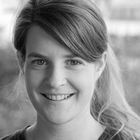
Monika Aidelsburger
Ludwig-Maximilians-Universität München, Germany
Invited – Workshop 02: Quantum matter: theory & simulations
Monika Aidelsburger is a professor at Ludwig Maximilian University of Munich and leads a research group at the Max Planck Institute of Quantum Optics. Her work explores how ultracold atoms can be used to simulate complex quantum systems, including topological matter and lattice gauge theories. After receiving her PhD from LMU, she was a Marie Curie Fellow at the Collège de France in Paris before returning to Munich to establish her group. Her experiments have pioneered the realization of artificial gauge fields and novel quantum many-body phases in optical lattices. She has received several awards, including an ERC Starting Grant, the Alfried Krupp Prize and the Klung Wilhelmy Science Award.
|
|
|
|
|
 |
| INVITED |
|
|
| . |
|
|
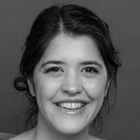
Natalia Ares
University of Oxford, UK
Invited – Plenary Session
Natalia Ares is an Associate Professor at the University of Oxford and a Tutorial Fellow at New College. Her research focuses on advancing quantum technologies, with particular emphasis on the experimental study of quantum thermodynamics and the development of artificial intelligence for the control of quantum devices. Originally from Argentina, Natalia completed her undergraduate studies in Physics and earned a master’s equivalent in the theory of quantum chaos at the University of Buenos Aires. She went on to pursue her PhD at CEA Grenoble in France, focusing on SiGe-based devices for quantum computing. Her work has been recognised with several prestigious awards and fellowships, including the Philip Leverhulme Prize, a Royal Society University Research Fellowship, and a European Research Council Starting Grant.
|
|
|
|
|
 |
| PLENARY |
|
|
| . |
|
|
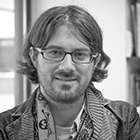
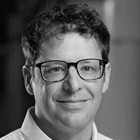
Bogdan Andrei Bernevig
Princeton University, USA
Plenary Talk
Bogdan Andrei Bernevig is a Professor of Physics at Princeton University, a visiting Ikerbasque professor at DIPC and a leading theoretical condensed matter physicist. He received his undergraduate degree from Stanford University in 2001 and completed his Ph.D. there in 2006 under Shoucheng Zhang.
Following a postdoctoral fellowship at the Princeton Center for Theoretical Science, he joined the Princeton faculty in 2009. His research centers on the prediction and classification of topological phases of matter, many-body systems, and strongly correlated materials.
He made foundational contributions to the prediction of the quantum spin Hall effect in HgTe quantum wells, establishing the field of topological insulators. His recent work heavily explores moiré superlattices, twisted bilayer graphene, topological heavy fermions, and altermagnetism.
He authored the widely used graduate textbook "Topological Insulators and Topological Superconductors."His theoretical contributions have been recognized with major scientific awards, including the Europhysics Prize, the New Horizons in Physics Prize, and the James C. McGroddy Prize for New Materials.
|
|
|
|
|
 |
| KEYNOTE |
|
|
| . |
|
|
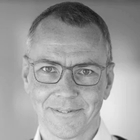
Alexandre Blais
University of Sherbrooke, Canada
Keynote – Plenary Session
Alexandre Blais is a professor of physics at the Université de Sherbrooke where he is the scientific director of the Institut quantique. Holder of the Chair on Quantum Computer Architectures, his theoretical research focuses on superconducting quantum circuits for quantum information processing. His work has contributed to the theoretical foundations of circuit quantum electrodynamics and to its emergence as a leading platform for superconducting quantum information processing. He is a member of the Advisory Council for the Canadian National Quantum Strategy, a member of CIFAR’s Quantum Information Science program, a member of the College of the Royal Society of Canada, and a Fellow of the American Physical Society. His research contributions have earned him a number of academic awards including NSERC’s Steacie Prize, the Canadian Association of Physicists’ Herzberg and Brockhouse Medals, the Prix Urgel-Archambault from the Association francophone pour le savoir, the Rutherford Memorial Medal of the Royal Society of Canada, and a Guggenheim Fellowship from the John Simon Guggenheim Memorial Foundation.
|
|
|
|
|
 |
| PLENARY |
|
|
| . |
|
|
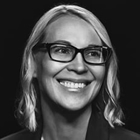
Immanuel Bloch
Max-Planck Institute of Quantum Optics, Germany
Plenary Talk
IMMANUEL BLOCH is scientific director at the Max Planck Institute of Quantum Optics in Garching and holds a chair for experimental physics at the Ludwig Maximilians University of Munich. His scientific work is among the most frequently cited in the field of quantum physics and has helped to open a new interdisciplinary research field at the interface of atomic physics, quantum optics, quantum information science, and solid state physics. For his research, he has received numerous international awards, including the Körber European Science Prize, the Harvey Prize, the Zeiss Research Award, the Stern Gerlach Medal of the German Physical Society, and was named Clarivate Citation Laureate in 2022 for work on quantum simulations.
|
|
|
|
|
 |
| KEYNOTE |
|
|
| . |
|
|
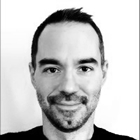
Alexandra Boltasseva
Purdue University, USA
Keynote – Plenary Session
Alexandra Boltasseva is a Ron and Dotty Garvin Tonjes Distinguished Professor of Electrical and Computer Engineering at Purdue University. She received her PhD in electrical engineering at Technical University of Denmark, DTU in 2004. Boltasseva specializes in nanophotonics, quantum photonics, and optical materials. She is the 2023 recipient of the R.W. Wood Prize (Optica), 2022 Guggenheim Fellow, 2018 Blavatnik National Award for Young Scientists Finalist and received the 2013 Institute for Electrical and Electronics Engineers (IEEE) Photonics Society Young Investigator Award, 2013 Materials Research Society (MRS) Outstanding Young Investigator Award, the 2011 MIT Technology Review Top Young Innovator (TR35). She is a Fellow of the National Academy of Inventors (NAI), MRS, IEEE, Optica, and SPIE.
|
|
|
|
|
 |
| INDUSTRIAL FORUM |
|
|
| . |
|
|
Massimo Borrelli
Bluefors Oy, Finland
Invited - Industrial Forum
Massimo Borrelli is a Senior Scientist at Bluefors Oy in Helsinki, Finland.
His work sits at the intersection of cryogenics, microwave engineering, and quantum computing, where he supports both Bluefors’ customers and internal R&D efforts.
He holds a PhD in theoretical physics from Heriot‑Watt University in Edinburgh, UK, and has an extensive research background in quantum science.
|
|
|
|
|
 |
| INDUSTRIAL FORUM |
|
|
| . |
|
|
Alvaro Caride-Tabares Sanchez
IQM Quantum Computers, Finland
Keynote - Industrial Forum
Álvaro Caride is a Solutions Engineer at IQM Quantum Computers, specializing in the integration of high-performance computing (HPC) and quantum technologies. With a background in physics and neuroscience, he played a key role in deploying and integrating QMIO, the first quantum installation embedded within an HPC center in Spain (CESGA – Galicia Supercomputing Center). Álvaro’s research focuses on hybrid quantum-classical platforms and optimizing the use of heterogeneous infrastructures to accelerate scientific and industrial applications.
|
|
|
|
|
 |
| WORKSHOP 6 |
|
|
| . |
|
|
Miguel A. Cazalilla
Donostia International Physics Center (DIPC), Spain
Invited – Workshop 06: Topological quantum matter: electronics, spintronics, photonics & phononics
Miguel A. Cazalilla obtained his PhD in Physics from the University of the Basque Country in 1999. Currently, he is Ikerbasque Research Professor at the Donostia International Physics Center (DIPC) in Donostia-San Sebastian. His research focuses on electron correlation effects in low-dimensional systems. He has made contributions to surface physics, low-dimensional systems, ultracold atomic gases, and spintronics. Earlier, he was a professor of Physics at the National Tsing Hua University in Taiwan and a tenured research scientist at the Center for Materials Physics of the Spanish National Research Council (CSIC) and held long-term visiting positions at the Yukawa Institute for Theoretical Physics of Kyoto University, Taiwan’s National Center for Theoretical Sciences, the National University of Singapore, the Institute of Solid State Physics of the University of Tokyo, the University of Tokyo, The Abdus Salam Centre for Theoretical Physics in Trieste (Italy), and Brown University (US). Since 2018, he is a Fellow of the American Physical Society
|
|
|
|
|
 |
| INDUSTRIAL FORUM |
|
|
| . |
|
|
Preeti Chalsani
Illinois EDC, USA
Keynote - Industrial Forum
Preeti serves as the inaugural Chief Quantum Officer for Illinois, the latest in our commitment to growing this industry in Illinois. In this new role, Preeti will work closely with leaders within Illinois’ science, technology, innovation, government and economic development ecosystem to lead business development for quantum and microelectronics, including for the recently announced Illinois Quantum and Microelectronics Park (IQMP)
Preeti brings over 20 years of experience in industry-academic relations, technology commercialization, intellectual property, research and education in academic, government and corporate environments. Most recently, she served as the Director of Industry Partnerships for the Chicago Quantum Exchange in a joint position with University of Chicago’s Polsky Center for Entrepreneurship and Innovation where she managed a portfolio of industry partners ranging from Fortune 500 companies to startups to develop strategic partnerships for research, knowledge and technology transfer, and workforce and ecosystem development with the goal of advancing development of quantum information science and technologies. She also served as the deputy director of Duality, the first startup accelerator program in the US dedicated to quantum and enabling technologies, having helped to launch the accelerator program in 2021. Preeti has served in the technology commercialization team at UChicago, supporting commercialization of physical sciences and engineering research, including through the formation of new ventures. Prior to joining UChicago, Preeti was in the field of intellectual property where she worked on a diverse range of technologies, with clients ranging from universities and startups, to SMEs and multinational corporations.
Preeti holds a BS in Applied Physics from Yale University and a PhD in Applied Physics from Cornell University.
|
|
|
|
|
 |
| INDUSTRIAL FORUM |
|
|
| . |
|
|
Philip Dolan
NU Quantum, UK
Keynote - Industrial Forum
|
|
|
|
|
 |
| INDUSTRIAL FORUM |
|
|
| . |
|
|
Timothy Duty
Qilimanjaro Quantum Tech, Spain
Invited - Industrial Forum
Timothy Duty is the Chief Scientific Officer at Qilimanjaro Quantum Tech and has pioneered development of superconducting quantum devices in both industrial and academic settings. He completed a PhD in Physics at the University of British Columbia in 2000, and was involved with the creation of D-Wave Systems in Vancouver. As a researcher at Chalmers University of Technology in Sweden during 2002-2007, his focus turned to charge qubits using radio-frequency readout, single charge sensing, and microwave quantum optics. He then pursued an academic career in Australia. As a professor and group leader at UNSW, he mentored early career researchers, taught university physics courses, and built up nanofabrication processing for superconducting quantum devices. His former students and postdocs have achieved successful careers in academia, industry and government research laboratories. In 2021 he returned to D-Wave Systems, where he conceived and led a project that produced state-of-the-art, high-coherence fluxonium qubits. He joined Qilimanjaro in 2024 to accelerate processor development targeting applications in analog quantum computing.
|
|
|
|
|
 |
| WORKSHOP 3 |
|
|
| . |
|
|
Suguru Endo
NTT R&D, Japan
Invited – Workshop 03: Quantum information
Suguru Endo is a distinguished researcher at NTT Computer and Data Science Laboratories. He received his bachelor’s and master’s degrees from Keio University in 2014 and 2016, and his Ph.D. degree from the University of Oxford in 2019. He has been working at NTT since 2020. His research interests include hybrid quantum-classical algorithms, quantum error mitigation, bosonic quantum error correction, and early fault-tolerant quantum computing.
|
|
|
|
|
 |
| WORKSHOP 6 |
|
|
| . |
|
|
Klaus Ensslin
ETH Zürich, Switzerland
Invited – Workshop 06: Topological quantum matter: electronics, spintronics, photonics & phononics
Klaus Ensslin is a professor in the physics department at ETH Zürich and the president of the Swiss quantum commission. He obtained his academic education in Germany, Switzerland and the US. His research focuses on quantum devices in graphene, in particular gate-defined quantum dots in bilayer graphene.
|
|
|
|
|
 |
| INVITED |
|
|
| . |
|
|
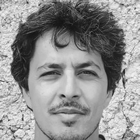
Gwendal Feve
ENS, France
Invited – Plenary Session
Gwendal Fève is a Professor at Sorbonne Université and conducts his research at the Laboratoire de Physique de l’École Normale Supérieure in Paris. His work centers on electron quantum optics experiments in quantum conductors. Inspired by photon quantum optics, this field involves manipulating single electrons in the edge channels of the quantum Hall effect. Unlike their photonic counterparts, these experiments are profoundly influenced by strong electronic interactions. In the fractional quantum Hall effect, such interactions lead to the emergence of exotic quasiparticles called anyons, which exhibit fractional statistics, a property that can be explored through electron quantum optics experiments. For his research, he received the Louis Ancel Prize from the French Physical Society in 2020, the Mergier-Bourdeix Prize from the French Academy of Sciences in 2024, and the Oliver E. Buckley Condensed Matter Prize from the American Physical Society in 2026.
|
|
|
|
|
 |
| WORKSHOP 5 |
|
|
| . |
|
|
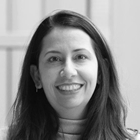
Marco G. Genoni
Universita Degli Studi Di Milano, Italy
Invited – Workshop 05: Quantum sensing
Marco G. Genoni received his PhD from University of RomaTre (Rome, Italy) and is currently Associate Professor at the Department of Physics of the University of Milan, Italy. He is a theoretical physicist with broad expertise in quantum information and quantum optics. His current research focuses on quantum metrology and quantum control of open quantum systems.
|
|
|
|
|
 |
| WORKSHOP 4 |
|
|
| . |
|
|
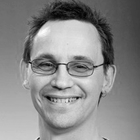
Nadia Haider
TU Delft, The Netherlands
Invited – Workshop 04: Quantum Computing
Since 2015, Nadia Haider has been a lead scientist at QuTech, where she has led a team working on the design and analysis of superconducting qubits and processors. She also played a key role in drafting a National Growth Fund proposal for Quantum Delta NL (QDNL), aimed at advancing quantum technology in the Netherlands. In August 2023, Nadia became a group leader at QuTech and in the Department of Microelectronics at Delft University of Technology. She is the recipient of a prestigious ERC Starting Grant. Her scientific interests include superconducting qubit design, cryogenic microwave circuit design, and simulation for quantum processors and sensors. She lives in The Hague with her husband and two sons. In her free time, she enjoys Pilates and gardening.
|
|
|
|
|
 |
| INVITED |
|
|
| . |
|
|
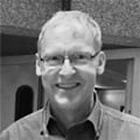
Alexander Hamilton
UNSW, Australia
Invited – Plenary Session
Alexander Hamilton is a Scientia Professor and Australian Research Council Industry Laureate Fellow at the University of New South Wales in Sydney. He obtained his PhD from the University of Cambridge. He has co-founded two ARC Centres of Excellence, served six years as a member of the ARC College of Experts, and is a Fellow of the American Physical Society. His research interests include experimental quantum electronics, quantum materials, and quantum computing, and has established industry collaborations with Diraq and IMEC.
|
|
|
|
|
 |
| INDUSTRIAL FORUM |
|
|
| . |
|
|
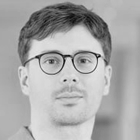
Stefan Hildebrandt
Wiley-VCH GmbH, Germany
Invited - Industrial Forum
Stefan Hildebrandt is Founding Editor of Advanced Quantum Technologies (QUTE) and the open-access title Advanced Physics Research (APXR) as well as Editor-in-Chief of the famous Annalen der Physik, once “Einstein’s journal” and today a leading international publication. As Associate Director Physical Sciences he is working on the physics journal portfolio development from the Berlin office of Wiley-VCH (come and visit!) together with a growing global team of Editors. He has been with the publisher since 1999. His research background is in solid state and surface physics.
|
|
|
|
|
 |
| INDUSTRIAL FORUM |
|
|
| . |
|
|
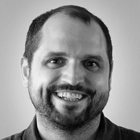
Valentino Jadrisko
Constructor Capital, Switzerland
Invited - Industrial Forum
|
|
|
|
|
 |
| INDUSTRIAL FORUM |
|
|
| . |
|
|
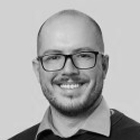
Pau Jorba
Kiutra, Germany
Invited - Industrial Forum
Pau’s experience with cryogenics goes back to his master’s at the EPFL working on scanning hall probe microscopy at milli-Kelvin temperatures. He then moved to Munich where he completed his PhD on the investigation of new magnetic phases under high pressure using diamond anvil cells at low temperatures. Pau’s technical expertise is complemented by language skills in Spanish, Catalan, English, French and German. He joined kiutra in 2022 as a Sales Engineer and provides advice and technical support to our customers.
|
|
|
|
|
 |
| INDUSTRIAL FORUM |
|
|
| . |
|
|
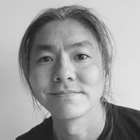
Piotr Kot
Qblox BV, The Netherlands
Keynote - Industrial Forum
Piotr is a Quantum Application Scientist at Qblox, a Netherlands-based leader in quantum control electronics. He specializes in experimental quantum physics, with a focus on electron spin resonance scanning tunneling microscopy (ESR-STM). Before joining Qblox, he completed a postdoctoral fellowship in South Korea, where he researched on-surface single atoms as potential spin qubits
|
|
|
|
|
 |
| WORKSHOP 1 |
|
|
| . |
|
|
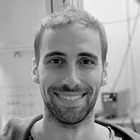
Eduardo Lee
IFIMAC / UAM, Spain
Invited – Workshop 01: Quantum materials: growth, characterization & device fabrication
Eduardo Lee obtained his PhD in physics from EPF Lausanne for the thesis “Scanning photocurrent microscopy of carbon nanostructures” developed at the Max Planck Institute for Solid State Research in Stuttgart, Germany. He then moved to the French Alternative Energies and Atomic Energy Commission (CEA) in Grenoble, France as a postdoctoral fellow, partially funded by a Marie Curie Fellowship. After that, he spent a year at the Institut Neel in Grenoble as a postdoc, before finally joining IFIMAC as a young researcher.
|
|
|
|
|
 |
| WORKSHOP 4 |
|
|
| . |
|
|
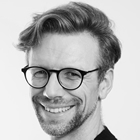
Zaki Leghtas
Ecole Normale Supérieure, France
Invited – Workshop 04: Quantum Computing
Zaki Leghtas is a physics Professor at École des Mines and École Normale Supérieure (ENS) in Paris. Together with Philippe Campagne-Ibarcq, they lead a group on experimental superconducting circuits. Their main focus is to build error-resilient qubits such as cat-qubits, GKP qubits, or symmetry-protected qubits.
Zaki was born in Agadir, Morocco, and moved to France to pursue a Masters at Ecole des Mines (2006) and a PhD in Applied Mathematics with Pierre Rouchon and Mazyar Mirrahimi (2012). Zaki then moved to Yale University for a postdoc with Michel Devoret from 2012 to 2015, where they developed the cat-qubit. Zaki returned to France in 2016 to join the joint research team QUANTIC (ENS, Mines, Inria). Zaki is also a scientific advisor to the startup Alice & Bob.
|
|
|
|
|
 |
| TUTORIAL |
|
|
| . |
|
|
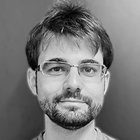
Titus Mangham-Neupert
University of Zurich, Switzerland
Turorial Speaker
Titus Neupert is a Professor of Physics at the Faculty of Science and a member of the board of the Digital Society Initiative (DSI) of the University of Zurich. He obtained his PhD at ETH Zurich and the Paul Scherrer Institute before becoming a postdoctoral fellow at the Center for Theoretical Science at Princeton University. In 2016, he was appointed to the University of Zurich and has since built up the research group for condensed matter theory. The research focuses on quantum materials with topological properties and strong correlations, including exotic semiconductors and magnets as well as new superconducting materials.
|
|
|
|
|
 |
| WORKSHOP 1 |
|
|
| . |
|
|
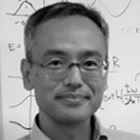
Samuel Mañas-Valero
TU Delft, The Netherlands
Invited – Workshop 01: Quantum materials: growth, characterization & device fabrication
Samuel Mañas-Valero is a Ramón y Cajal fellow (tenure-track) at the University of Valencia (Spain). Previously, he was a Marie Curie and Kavli postdoctoral fellow at Delft University of Technology (The Netherlands, 2022–2025). He received his PhD in 2021 from the Universitat de València, Spain.
His research focuses on low-dimensional quantum materials —both inorganic and molecular in nature— with particular emphasis on the isolation and investigation of the electronic and magnetic properties of two-dimensional (2D) magnetic phases. He studies these systems from crystal growth and nanodevice fabrication to their characterization using magnetotransport and quantum sensing techniques (color-center magnetometry based on spin defects), among other methods.
|
|
|
|
|
 |
| TUTORIAL |
|
|
| . |
|
|
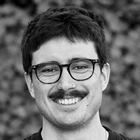
Yasunobu Nakamura
University of Tokyo, Japan
Turorial Speaker
Yasu Nakamura began his research career at the NEC Fundamental Research Laboratories in Tsukuba, Japan, in 1992, where he demonstrated the first coherent manipulation of a superconducting qubit in 1999 and met quantum information science. He spent a year as a Visiting Researcher at TU Delft from 2001 to 2002. Since 2012, he has been a Professor at the University of Tokyo. He has also led his research team at RIKEN, a national institute of Japan, since 2014. He has been the founding Director of the RIKEN Center for Quantum Computing since 2021 and the Project Leader of the MEXT Q-LEAP Flagship project on Superconducting Quantum Computing since 2018.
|
|
|
|
|
 |
| INDUSTRIAL FORUM |
|
|
| . |
|
|
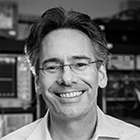
Álvaro Nodar
Global DataQuantum, Spain
Keynote - Industrial Forum
Álvaro Nodar is a Technical Lead at Global Data Quantum, where he focuses on translating quantum computing research into practical, industry-ready applications. He holds a PhD in nanophotonics from CFM (UPV/EHU – CSIC). At Global Data Quantum, he supports companies across the full quantum adoption cycle, from identifying high-value use cases to developing functional prototypes. His work spans optimization and quantum machine learning, with a strong emphasis on hybrid classical–quantum algorithms. He has particular interest in integrating HPC workflows to maximize the performance of near-term quantum resources. His profile is oriented toward bridging research and industrial impact. He is also an active BasQ Advocate, contributing to collaboration and technical excellence within the Basque quantum ecosystem.
|
|
|
|
|
 |
| KEYNOTE |
|
|
| . |
|
|
William D. Oliver
MIT, USA
Keynote – Plenary Session
William D. Oliver is jointly appointed the Henry Ellis Warren (1894) Professor of Electrical Engineering and Computer Science and Professor of Physics at the Massachusetts Institute of Technology. He serves as the Director of the Center for Quantum Engineering and as Associate Director of the Research Laboratory of Electronics. He is a Principal Investigator in the Engineering Quantum Systems Group at MIT campus. He provides programmatic and technical leadership targeting the development of quantum and classical high-performance computing technologies. Will’s research interests include the materials growth, fabrication, design, and measurement of superconducting qubits, as well as the development of cryogenic packaging and control electronics involving cryogenic CMOS and single-flux quantum digital logic.
|
|
|
|
|
 |
| INDUSTRIAL FORUM |
|
|
| . |
|
|
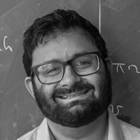
Roman Orus
Multiverse Computing & DIPC, Spain
Invited - Industrial Forum
I am the Scientific Director (CSO) and Cofounder of Multiverse Computing, as well as Ikerbasque research professor at the Donostia International Physics Center (DIPC) in San Sebastián, Spain. After obtaining my degree and PhD in Physics at the University of Barcelona in 2006, I worked as a research fellow at the University of Queensland, Australia, and the Max Planck Institute of Quantum Optics, Germany, as well as a junior professor at Johannes Gutenberg-Universität in Mainz, Germany. I was also visiting professor at the Universitè Paul Sabatier – CNRS, France, and at the DIPC. My research has been recognized by several awards, including a Marie Curie Incoming International Fellowship, and the Early Career Prize (2014) by the European Physical Society. I have written more than 80 scientific articles about quantum research cited around 5500 times, and I am also honorary member of the steering board of the journal Quantum, member of the ‘Quantum for Quants’ (Q4Q) commission of the Quantum World Association, partner at Entanglement Partners, and president of the Specialized Group on Quantum Information at the Spanish Royal Society of Physics.
|
|
|
|
|
 |
| WORKSHOP 2 |
|
|
| . |
|
|
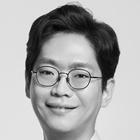
Siddharth Ashok Parameswaran
University of Oxford, UK
Invited – Workshop 02: Quantum matter: theory & simulations
I am a theoretical physicist working on quantum many-body systems. I am broadly interested in all aspects of condensed matter, and particularly in unusual phenomena that emerge as a result of strong interactions or in non-equilibrium settings. In recent years, I have worked extensively on topological phases of matter, non-equilibrium dynamics, and many-body localized systems. I also actively collaborate with experimental groups, both at Oxford and around the world.
|
|
|
|
|
 |
| WORKSHOP 6 |
|
|
| . |
|
|
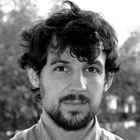
Joon Young Park
Sungkyunkwan University / IBS-2DQH, South Korea
Invited – Workshop 06: Topological quantum matter: electronics, spintronics, photonics & phononics
Joon Young Park is an Assistant Professor of Physics at Sungkyunkwan University (SKKU) and a Team Leader at the Center for 2D Quantum Heterostructures, Institute for Basic Science (IBS-2DQH) in South Korea. His research focuses on quantum electronic transport in van der Waals layered materials, with primary interests in topological materials and mesoscopic superconductivity. Before joining SKKU/IBS, he was a Postdoctoral Fellow and Research Associate in Prof. Philip Kim's group at Harvard University (2019-2024). He received his Ph.D. in Physics from Seoul National University (2019).
|
|
|
|
|
 |
| TUTORIAL |
|
|
| . |
|
|
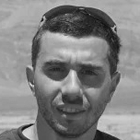
Marti Perarnau Llobet
Universidad Autónoma de Barcelona, Spain
Turorial Speaker
Martí Perarnau-Llobet is an ATRAE Researcher at the Autonomous University of Barcelona. He received his Ph.D. from ICFO-The Institute of Photonic Sciences in 2016, followed by Postdoctoral stays in the Max Planck Institute of Quantum Optics and the University of Geneva. His research interests encompass various topics in quantum and stochastic thermodynamics, quantum metrology and quantum information. He was awarded a Humboldt Fellowship in 2016, an SNF Ambizione Grant in 2019, and a Ramón y Cajal Fellowship in 2022. His work has been recognized with the NJP Early Career Researcher Award (2020) and the RSEF–BBVA Young Researcher Award in Theoretical Physics (2024).
|
|
|
|
|
 |
| WORKSHOP 2 |
|
|
| . |
|
|
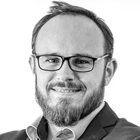
Alessandro Principi
The University of Manchester, UK
Invited – Workshop 02: Quantum matter: theory & simulations
Dr Alessandro Principi is a Senior Lecturer in Theoretical Condensed Matter Physics at the Department of Physics and Astronomy in the University of Manchester.
|
|
|
|
|
 |
| INDUSTRIAL FORUM |
|
|
| . |
|
|
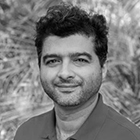
Claudius Riek
Zurich Instruments, Switzerland
Keynote - Industrial Forum
Dr. Claudius Riek is the Managing Director of Zurich Instruments Germany and leads the EMEA region. He began his career as an Application Scientist with expertise in photonics, broadening his scope to deliver optimal measurement solutions from solid-state physics to quantum computing. Driven by a passion for building collaborations with users, he assembled a strong team at Zurich Instruments to support customers and develop application-specific software. Claudius holds a PhD in Time-Domain Quantum Electrodynamics and is fascinated by how fundamental science can shape future products.
|
|
|
|
|
 |
| INDUSTRIAL FORUM |
|
|
| . |
|
|
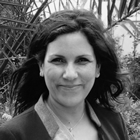
Pedram Roushan
Google Inc., USA
Keynote - Industrial Forum
Pedram Roushan is a Principal Research Scientist at Google Quantum AI, where he leads experimental NISQ algorithms and quantum simulations. After a PhD at Princeton and a postdoc at UCSB, he joined Google and contributed to the 2019 quantum supremacy milestone. His current research focuses on non-equilibrium dynamics and early scientific discoveries made on NISQ hardware.
|
|
|
|
|
 |
| WORKSHOP 2 |
|
|
| . |
|
|
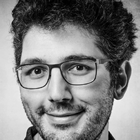
Inès Safi
CNRS / Paris Saclay University, France
Invited – Workshop 02: Quantum matter: theory & simulations
Inès Safi is a theoretical physicist at CNRS, affiliated with the Laboratoire de Physique des Solides at Université Paris-Saclay. She earned her PhD in this university after studying at École Polytechnique and Rutgers University. Following a postdoctorate at CEA Saclay, she joined the Centre de Physique Théorique in Marseille before returning to Laboratoire de Physique des Solides.
Her research focuses on nonequilibrium quantum transport in strongly correlated systems, particularly within quantum optics for electrons and quantum circuits under dynamical Coulomb blockade. She has developed unifying theories and approaches that have inspired and guided experimental studies by leading research groups, often through collaborative efforts.
Inès Safi is also an invited professor at UM6P- Université Mohammed VI Polytechnique in Morocco and at Sciences Po Paris.
|
|
|
|
|
 |
| WORKSHOP 4 |
|
|
| . |
|
|
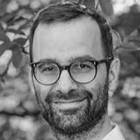
Pasquale Scarlino
EPFL, Switzerland
Invited – Workshop 04: Quantum Computing
Pasquale Scarlino is a Tenure-Track Assistant Professor of Physics at EPFL, where he founded and leads the Hybrid Quantum Circuits (HQC) laboratory. His research focuses on hybrid circuit quantum electrodynamics, combining superconducting microwave technology with semiconductor quantum dots to realize controllable light–matter interaction at the single-photon level. His work spans strong spin- and charge-photon coupling, high-impedance superconducting technology, engineered multimode superconducting photonic environments, kinetic-inductance parametric amplifiers, and microwave single-photon detection, targeting scalable quantum information processing.
|
|
|
|
|
 |
| WORKSHOP 6 |
|
|
| . |
|
|
Albert Schliesser
Copenhagen University, Denmark
Invited – Workshop 06: Topological quantum matter: electronics, spintronics, photonics & phononics
Albert Schliesser obtained his PhD in 2009, at the Max-Planck Institute of Quantum Optics under the supervision of T. W. Hänsch. After a postdoc at École Polytechnique Fédérale de Lausanne, he joined the Niels Bohr Institute in Copenhagen, where he became full professor in 2016. With his group he conducts research in the areas of Quantum Optics, Optomechanics, and Hybrid Quantum Systems, pioneering e.g. highly coherent mechanical devices and their quantum control with light and microwaves. He is recipient of the Otto Hahn medal, EPS early career prize, IUPAP Young Scientist Prize, the Danish EliteForsk prize and both a Starting and a Consolidator ERC grant. In 2020 he has been elected Fellow of Optica.
|
|
|
|
|
 |
| KEYNOTE |
|
|
| . |
|
|
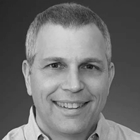
Robert J. Schoelkopf
Yale University, USA
Keynote – Plenary Session
Robert Schoelkopf is the Sterling Professor of Applied Physics and Physics at Yale University. His research focuses on the development of superconducting devices for quantum information processing, which are leading to revolutionary advances in computing.
His group is a leader in the development of solid-state quantum bits (qubits) for quantum computing, and the advancement of their performance to practical levels. Together with his collaborators at Yale, Professors Michel Devoret and Steve Girvin, their team created the new field of “circuit quantum electrodynamics,” which allows quantum information to be distributed by microwave signals on wires. His lab has produced many firsts in the field based on these ideas, including the development of a “quantum bus” for information, and the first demonstrations of quantum algorithms and quantum error correction with integrated circuits.
A graduate of Princeton University, Schoelkopf earned his Ph.D. at the California Institute of Technology. From 1986 to 1988 he was an electrical/cryogenic engineer in the Laboratory for High-Energy Astrophysics at NASA’s Goddard Space Flight Center, where he developed low-temperature radiation detectors and cryogenic instrumentation for future space missions.
Schoelkopf, who came to Yale as a postdoctoral researcher in 1995, joined the faculty in 1998, becoming a full professor in 2003. He is also the Director of the Yale Quantum Institute.
|
|
|
|
|
 |
| TUTORIAL |
|
|
| . |
|
|
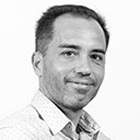
Juan Francisco Sierra
ICN2, Spain
Turorial Speaker
|
|
|
|
|
 |
| KEYNOTE |
|
|
| . |
|
|
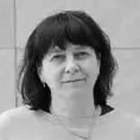
Susanne Stemmer
UC Santa Barbara, USA
Keynote – Plenary Session
Susanne Stemmer is Professor of Materials at the University of California, Santa Barbara. Her research interests include scanning transmission electron microscopy techniques, molecular beam epitaxy, and topological materials. Honors include election to Fellow of the American Ceramic Society, Fellow of the American Physical Society, Fellow of the Materials Research Society, Fellow of the Microscopy Society of America, and a Vannevar Bush Faculty Fellowship of the U.S. Department of Defense
|
|
|
|
|
 |
| INDUSTRIAL FORUM |
|
|
| . |
|
|
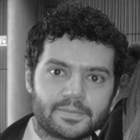
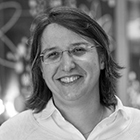
Felice Francesco Tafuri
Keysight Technologies, Italy
Invited - Industrial Forum
Felice Francesco Tafuri received the B.Sc. in 2007 and the M.Sc. in 2010 in Electronics Engineering, both cum laude, from the Polytechnic of Bari, Italy. In 2014 he obtained the Ph.D. degree from Aalborg University, Denmark with a dissertation on linearity and efficiency enhancement of mobile communication power amplifiers. From 2014 till 2018 he was an industrial postdoc with Aalborg University and Keysight Technologies Denmark, working on advanced measurement platforms for characterization and modeling of RF power amplifiers. Since 2018 he has been with Keysight Technologies Spain as an Application Engineer. In 2023 he joined the Quantum Engineering Solution team at Keysight as a Quantum Solution Expert. His research interests include digital signal processing applications to measurement techniques and qubit characterization techniques.
|
|
|
|
|
 |
| WORKSHOP 7 |
|
|
| . |
|
|
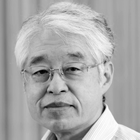
Leticia Tarruell
ICFO, Spain
Invited – Workshop 07: Quantum simulation
Leticia Tarruell studied physics in Madrid and Paris. She obtained her PhD in 2008, with a thesis on fermionic superfluidity at Ecole Normale Supérieure Paris. As a postdoc, she studied Fermi gases in optical lattices at ETH Zurich. After working as Chargée de Recherche CNRS at Institut d’Optique in Bordeaux, she joined ICFO as Group Leader in 2013, and became ICREA professor in 2022. The Ultracold Quantum Gases group that she has established at ICFO performs quantum simulation experiments with mixtures of potassium Bose-Einstein condensates, ultracold strontium gases in optical lattices, and arrays of Rydberg atoms. She was awarded a young investigator prize of the Spanish Royal Physics Society in 2015, a Ramón y Cajal fellowship in 2016, an ERC Consolidator Grant in 2020, and the BEC Junior Award in 2025.
|
|
|
|
|
 |
| PLENARY |
|
|
| . |
|
|
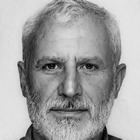
Seigo Tarucha
RIKEN, Japan
Plenary Talk
Seigo Tarucha received the B. E. and M. S. degrees from the University of Tokyo in 1976 and 1978, respectively. He joined NTT in 1978 and received the Ph. D degree in applied physics from the University of Tokyo in 1986. In 1998 he moved to the University of Tokyo as a professor in the Phys. Dept. and then to the Appl. Phys. Dept. in 2004. In 2019 he retired from the University of Tokyo and since then has been fully affiliated to RIKEN Center for Emergent Matter Science (CEMS). He has been running a research group in CEMS since 2012 and additionally a research team in Center for Quantum Computing (RQC) since 2021. His current research interests have focused on spin-based quantum computing. He received Kubo Ryogo award, Nishina award in 2002, National medal with purple ribbon in 2004, Leo Esaki Award in 2007, Achievement award of Japan Applied Physics Society in 2018, and Fujiwara Award in 2023.
|
|
|
|
|
 |
| INDUSTRIAL FORUM |
|
|
| . |
|
|
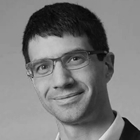
Ivano Tavernelli
IBM Research, Switzerland
Keynote - Industrial Forum
Ivano Tavernelli is a Senior Research Staff Member in Quantum Quantum at IBM Research – Zurich. In 2018 he became IBM Global leader for Advanced Algorithms Quantum Simulations, responsible for quantum simulations and applications in physics, chemistry, biology and materials science. His focus is the design of efficient and scalable quantum algorithms for near-term and fault-tolerant quantum computers. Prior to IBM, he first undertook a Post-Doctoral fellowship at the Cambridge University (UK) and then served as a Maître of Teaching and Research at the Swiss Federal institute of Technology of Lausanne (EPFL). He holds two master degrees, in Biochemistry and Theoretical Physics from ETH Zurich, and a doctorate in natural sciences also from ETH Zurich.
|
|
|
|
|
 |
| WORKSHOP 3 |
|
|
| . |
|
|
Jacob Taylor
QuICS, USA
Invited – Workshop 03: Quantum information
Jake Taylor is CEO of Axiomatic AI which is accelerating science and engineering by enabling valid and verifiable AI solutions. A physicist by training, with a long history of working on the future of computing, he also co-founded the Joint Center for Quantum Information and Computer Science at the University of Maryland and created the U.S. Center for AI Standards and Innovation and its accompanying Consortium at the National Institute of Standards and Technology. From 2017-2020, he led the U.S. effort in creating and implementing the National Quantum Initiative as the first Assistant Director for Quantum Information Science at the White House Office of Science and Technology Policy. A fellow of the American Physical Society and of Optica, Jake has also been awarded the bronze, silver, and gold medals by the U.S. Department of Commerce for his research and his work in advancing science and technology for the United States.
|
|
|
|
|
 |
| INVITED |
|
|
| . |
|
|
Juan Artes Vivancos
European Research Council, Belgium
Invited – Plenary Session
After over a decade doing research in nanoscience and biophysics as an Associate Professor at the University of Massachusetts, I transitioned to a research administration and policy advising role in the ERC Executive Agency. During my research career, I have acquired strong expertise in Molecular Electronics, Single-molecule Biophysics, Biosensors, and Nanoscience. My career has also included teaching at all levels and service to the scientific profession. Nowadays, I focus on the ERC funding evaluations for the Condensed Matter Physics panel
|
|
|
|
|
 |
| WORKSHOP 4 |
|
|
| . |
|
|
Martin Weides
University of Glasgow, UK
Invited – Workshop 04: Quantum Computing
Martin Peter Weides is Professor of Quantum Technologies at the University of Glasgow and Director of the James Watt Nanofabrication Centre (JWNC), where he leads efforts in superconducting quantum device fabrication. His research focuses on materials for quantum technologies, superconducting qubits, hybrid quantum systems, and nanofabrication strategies to enhance coherence and scalability.
He previously held posts at KIT, NIST Boulder, UCSB and Juelich, and earned his PhD from the University of Cologne (2006). He is a founding member of the Quantum Computing Application Cluster and co-leads the EPSRC-funded EPIQC programme on interfacing cryogenic quantum circuits, and he serves as editor at Applied Physics Letters.
|
|
|
|
|
 |
| INVITED |
|
|
| . |
|
|
Simon Zihlmann
CEA Grenoble, France
Invited – Plenary Session
Simon Zihlmann is a researcher at CEA Grenoble (IRIG-PHELIQS), where he holds a permanent research position since 2023. He obtained his PhD in Physics from the University of Basel in 2018, working on spin and charge dynamics in graphene-based systems. After his PhD, he joined CEA Grenoble as a postdoctoral researcher (2019–2023), where he contributed to the development of hybrid semiconductor–superconductor quantum devices. His current research focuses on spin qubits and their coupling to microwave photons in circuit-QED architectures, aiming to advance scalable platforms for quantum information processing.
|
|
|
|
|
| |
|
|